
The governance architecture behind SureVoter isn't a legal formality. It's a directional commitment — and here's the thinking behind it.
Every company makes choices about how it is structured. Most are driven by familiar considerations — tax efficiency, investor expectations, liability protection — and then largely forgotten by everyone except the people filing the paperwork.
At SureVoter, our structural choices keep us up at night. In the best possible way.
We are not building a software product. We are building civic infrastructure. And civic infrastructure carries a higher level of responsibility than most companies are willing to accept. The great infrastructure projects of American history — the utilities, the communications networks, the financial systems — each required their builders to think beyond the product and toward the public trust it would need to earn and keep over generations. That is the standard we are holding ourselves to.
This article is not a description of a structure we have already completed. It is an account of where we are going — the governance principles we intend to put in place as SureVoter reaches product-market fit and begins to scale. We are sharing it now, before the formal work is done, because the thinking behind the structure matters as much as the structure itself.
The most important structural challenge for any platform in this space is this: how do you separate the stewardship of civic systems from the commercial incentives of a private company — while still building something excellent enough to actually work?
We welcome the scrutiny that question invites. And we are designing for it from the beginning.
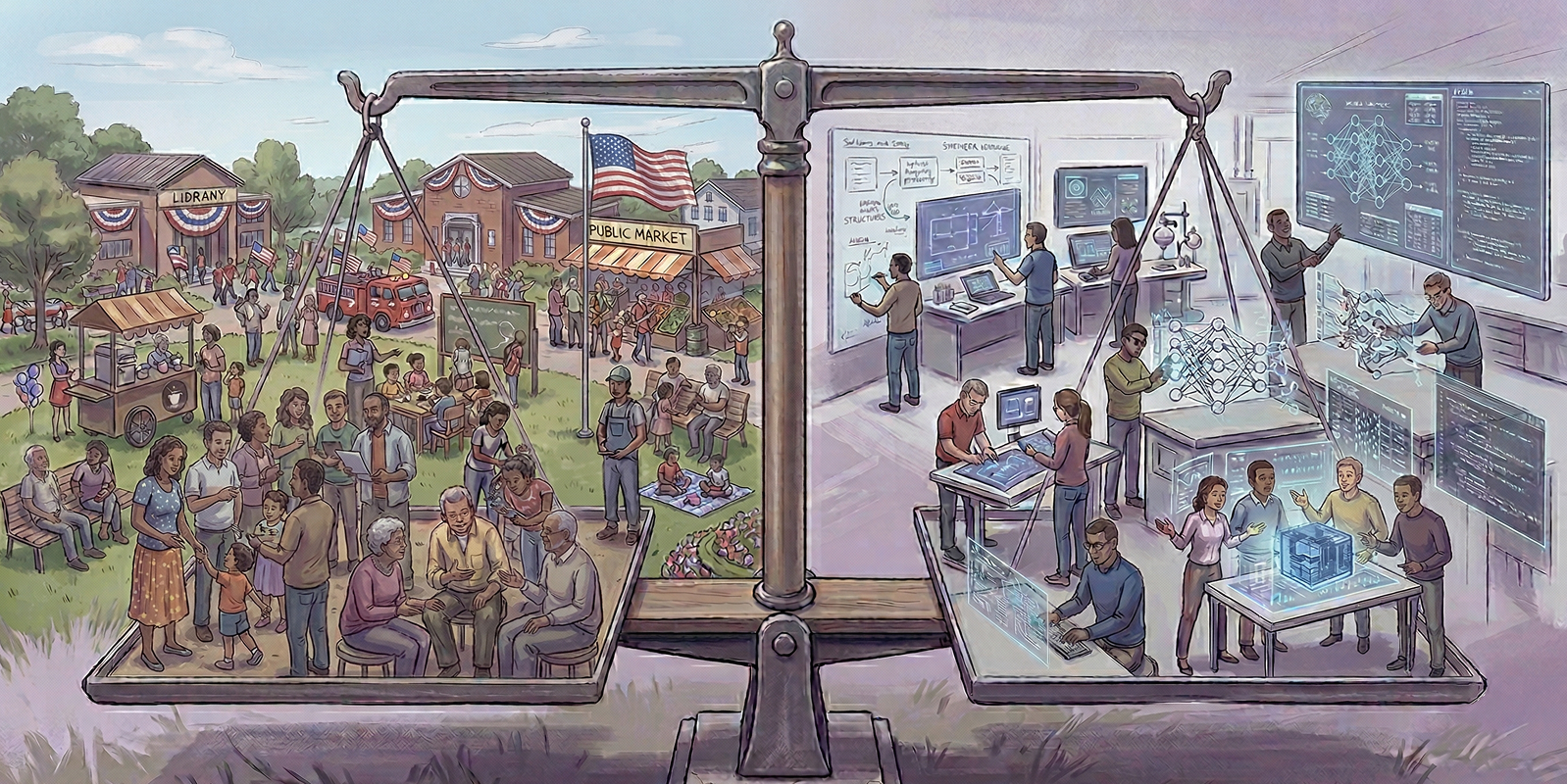
Our current thinking — directional, subject to refinement as we build and learn — is a structure built around two distinct entities with two distinct roles.
A private operating company will be responsible for building and maintaining the technology. It will have the speed, flexibility, and access to talent and capital that building world-class technology requires. Its focus will be singular: building the best possible civic tools in service of the representatives and citizens who rely on them.
A nonprofit foundation — the SureVoter America Foundation — will be responsible for protecting the civic mission. Its sole focus will be the interests of citizens. It will steward the standards, the ethics, and the integrity of the platform the operating company builds. Citizen data will ultimately be the Foundation's responsibility to protect. The Foundation's board will be bipartisan by design, and its independence from any single funder or interest will be a structural requirement, not a stated aspiration.
We want to be honest about why we are heading this way. It is not primarily because we are unusually virtuous. It is because we thought carefully about the incentives that would operate on us over time — the pressures that grow as companies scale, as the organization takes on a life of its own — and concluded that the right answer was to build structural safeguards in from the start rather than manage pressures case by case later.
The best governance structures are not built on trust in specific individuals. They are built on the understanding that individuals change, organizations evolve, and the right answer is to make it structurally easy to do the right thing — even as circumstances shift around the people doing it.
This is the same logic behind the constitutional design of the American Republic. The Founders did not build separation of powers because they believed future leaders would be corrupt. They built it because they understood that good intentions are not a durable governance mechanism, and that structure outlasts any individual within it. [1]
What We Haven't Figured Out Yet
We will say this plainly: the details of this structure are not settled. We have the direction. We do not yet have every answer.
How do we sequence the formation of the Foundation relative to the operating company's growth milestones? What does genuine bipartisanship look like on a foundation board, and how do we protect it as the civic environment shifts over time? How do we ensure the Foundation's financial independence from any single funding source? How do we draft governance documents that are both legally robust and publicly legible — binding enough to hold under pressure, clear enough that any citizen can read them and understand what they protect?
These are active design problems. We are working through them with legal scholars, governance experts, and civic technology veterans who have navigated similar challenges in other contexts.
What we can say with confidence is the destination: a structure in which the operating company builds excellent technology and the Foundation stewards the civic mission — each with a clearly defined role, genuine independence, and the structural protections needed to keep both accountable over time. The timing and precise mechanics will be shaped by what we learn as we build. The destination will not change.
Our commitment is to work through these questions publicly — to share what we are learning, what we are uncertain about, and what we decide, and why. The next article in this series goes further, cataloging the specific risks we see in our own model and how we are thinking about them.
An organization willing to name its own unfinished work is more trustworthy than one that presents a completed blueprint it hasn't actually built yet.
SureVoter is building toward civic infrastructure that can be trusted across generations — not just across election cycles. Follow our transparent build at SureVoter.com.
[1] Madison, J. (1788). Federalist No. 51: The Structure of the Government Must Furnish the Proper Checks and Balances Between the Different Departments. The Federalist Papers. Madison's argument that "ambition must be made to counteract ambition" — that structural incentives, not individual virtue, are the durable foundation of good governance — remains the most cogent case for why organizational design matters more than the intentions of any specific leader.